
The Mistake Almost Everyone Makes First
It's six degrees out, you're already running late, and the garage door won't lift. The instinct is to mash the opener button again, or hold it down longer, hoping extra electrical push will break whatever's holding the door in place. It's tempting because it's the fastest thing you can do from the driver's seat, and sometimes it even works. But if the door is actually frozen to the ground or the seal is iced over, repeated forcing just makes the opener's motor strain against a load it isn't built to fight. That can strip the gear inside the unit, trip the safety sensors into a reverse cycle, or in bad cases, bend a panel or bow the bottom section of the door itself. If the door isn't moving smoothly on the first or second try, stop and look at what's actually stuck before you push harder.
Symptoms to Watch For
- Door won't move at all, and the opener motor hums or strains without lifting it.
- Door starts to open, then stops or reverses partway, sometimes with a grinding or cracking sound right before it releases.
- Door is noticeably sluggish, moving slower than normal or hesitating at certain points in the track.
- Visible frost or ice along the bottom seal where it meets the concrete.
- A loud pop or snap when the door finally breaks free, which is usually the ice seal letting go, not something breaking.
What's Actually Going On, Checked in Order
1. Ice Sealing the Bottom to the Ground or Driveway
This is the first thing worth checking because it's the most common cause after a hard freeze, especially with Elkhart's mix of melting snow, refreezing overnight, and road salt tracked onto the driveway apron. Water gets under the bottom weatherstripping, freezes, and glues the door to the concrete. The fix is simple but needs patience: gently break the seal by hand near the corners, use a plastic scraper rather than metal (metal can gouge the seal or the slab), and avoid pouring hot water on it, since that just refreezes into a thicker sheet a few minutes later. A bag of ice melt along the threshold the night before a freeze works better than trying to chip it out in the morning.
2. Stiff or Frozen Weatherstripping
Rubber gets brittle in the cold and can shrink slightly, which changes how it sits against the slab. If the seal looks cracked, flattened, or torn after you break it free, it's not going to reseal well and will keep catching moisture. Replacing the bottom seal is a straightforward maintenance item, and doing it before deep winter sets in prevents this exact problem from repeating every cold snap.
3. Thickened Lubricant on Rollers and Hinges
Once the door is clear of the ground, a tech checks how it moves through the track. Standard grease and old WD-40 residue thicken in cold temperatures, which makes rollers and hinges drag instead of rolling freely. This shows up as that general sluggishness even after the ice issue is solved. The fix is cleaning off old buildup and applying a lithium-based or silicone lubricant rated for cold weather on the rollers, hinges, and track, not a household oil that gums up again in a week.
4. Spring Tension Changes in Cold Metal
Torsion and extension springs are tuned to lift a specific door weight, and metal contracts slightly in extreme cold, which can make a door feel heavier or harder to lift than usual, especially on older springs that were already near the end of their life. If the door struggles evenly across its whole travel, not just at the bottom, tension is worth checking. This is a balance test a technician runs by hand with the opener disconnected, and if the springs are undersized or worn, replacement is the real fix rather than a temporary adjustment.
5. Ice or Debris in the Tracks
Snowmelt that drips off the car and refreezes inside the track can cause rollers to bind or jump the track slightly. A quick visual check along both tracks for ice buildup or bent sections usually catches this.
6. Opener Force Settings Working Harder Than Usual
A door that's heavier or stiffer from cold will ask more of the opener, which can trip force limits meant to keep the door safe. If everything mechanical checks out but the opener still stalls or reverses, the settings may need a seasonal recheck rather than a full repair.
When to Call Elkhart Garage Door
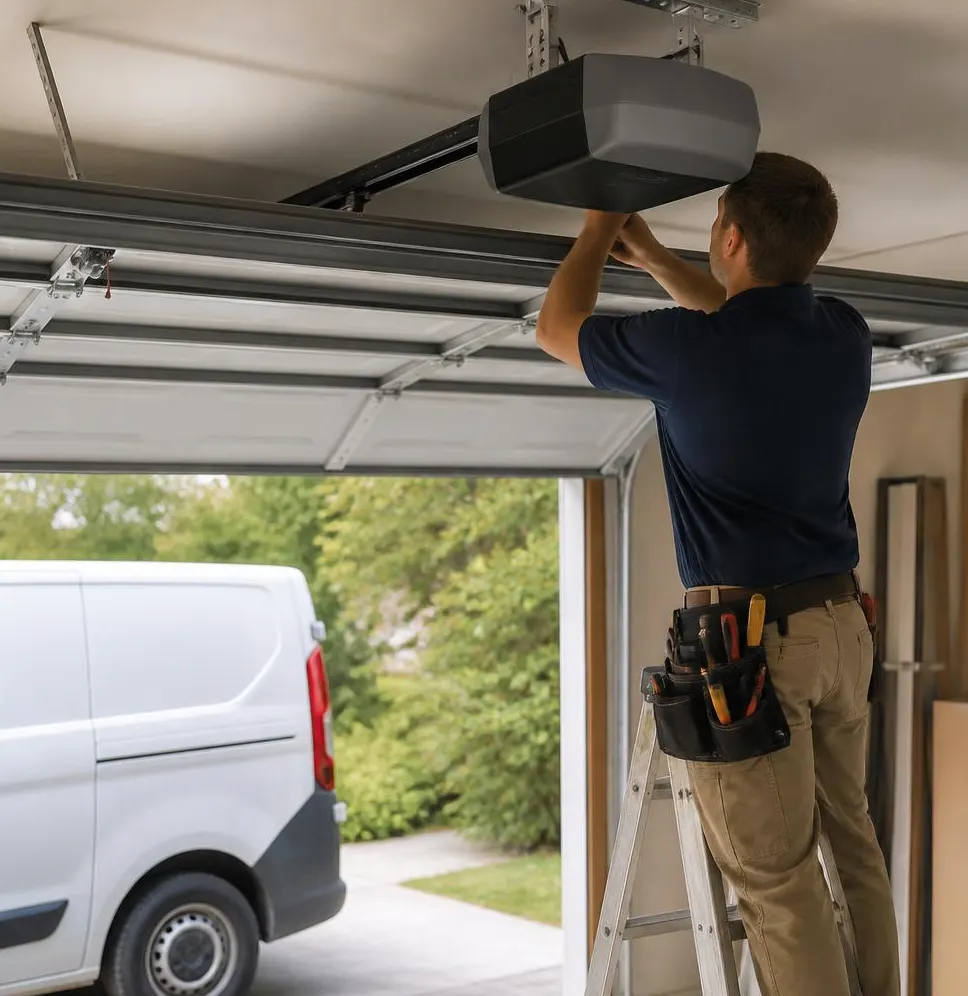
If the door is frozen solid, reversing on its own, or the spring tension feels off when you lift it by hand, it's time to call. Elkhart Garage Door handles both Spring Replacement and Garage Door Maintenance, and a cold-weather visit typically means checking the bottom seal, lubricating every moving part with a cold-rated product, testing spring balance, and confirming opener force settings are dialed in for the season rather than just getting the door open one more time.
If your garage door is fighting you every freeze this winter, give Elkhart Garage Door a call. We serve homes and businesses throughout Elkhart, IN and nearby, and we'd rather fix the real problem now than have you forcing it open every cold morning.